

Real Doctors, Fake Sales: How AI Scams Reveal the Digital Trust Paradox While 62% of Companies Admit to Overvaluing Technology
September 6, 2025 | by Matos AI
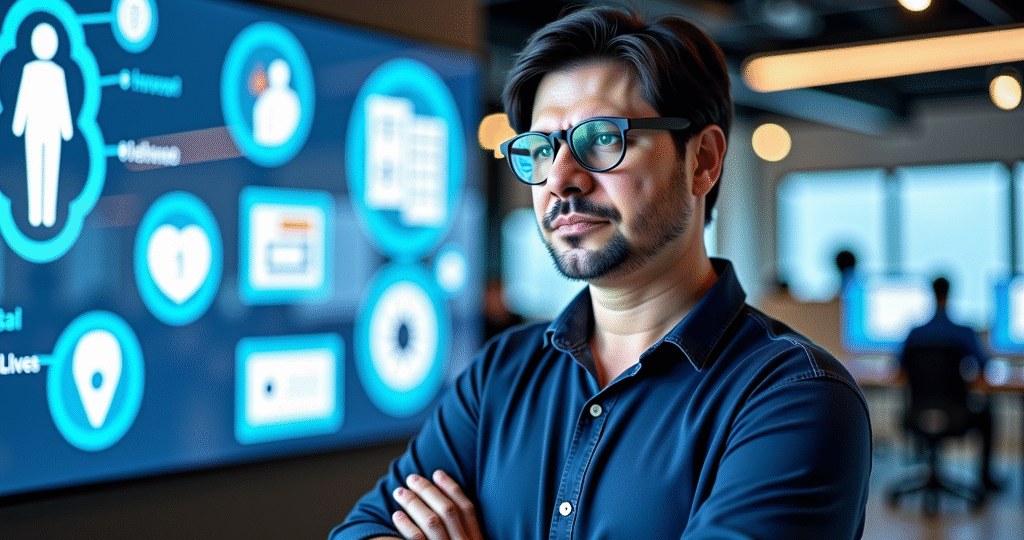
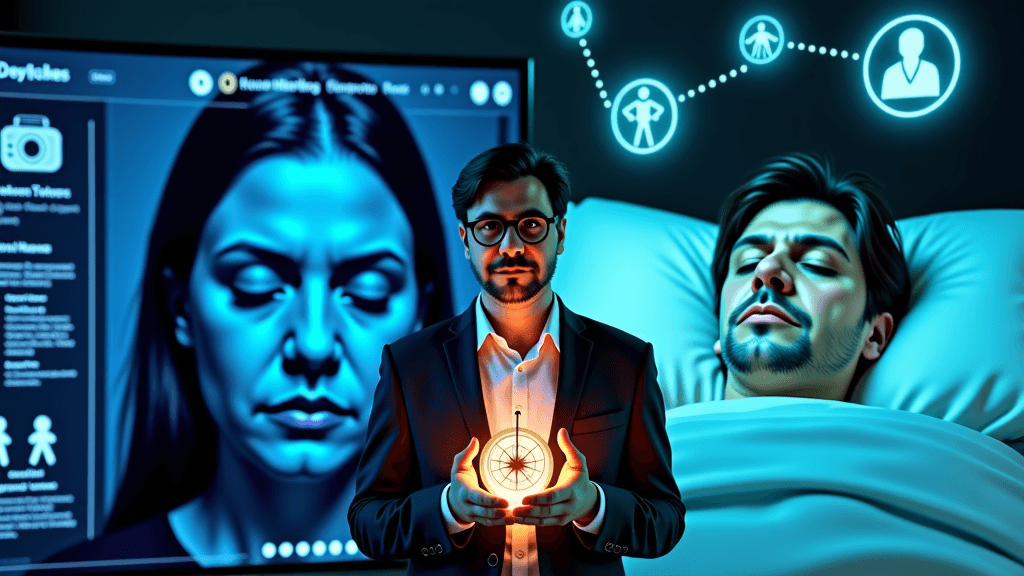
Imagine discovering that your image and voice are being used, without your authorization, to sell fake slimming products to millions of people. This is exactly what happened to Dr. Robert H. Lustig, a renowned endocrinologist, whose case exemplifies a global phenomenon that is redefining our relationship with artificial intelligence.
In the last 24 hours, a series of news stories have revealed a fascinating paradox: as scammers use AI to create increasingly sophisticated frauds, 62% of global professionals believe that AI is overvalued by companies, with 43% of Brazilians sharing this view. How did we reach this point of distrust just when technology is becoming more powerful?
The Dark Side of AI: When Technology Turns Against Trust
Dr. Lustig's case is not isolated. According to a report in The New York Times published in InfoMoney, scammers are using AI tools developed by major technology companies to create highly convincing fake videos that “hijack” the credibility of renowned doctors.
Join my WhatsApp groups! Daily updates with the most relevant news in the AI world and a vibrant community!
- AI for Business: focused on business and strategy.
- AI Builders: with a more technical and hands-on approach.
What strikes me about this story is not just the technical sophistication of the scams, but the devastating social impact. Patients are abandoning legitimate therapies based on false recommendations from “doctors” who never said those words. This goes far beyond simple financial fraud - we're talking about direct risks to public health.
Platforms such as YouTube, TikTok, Amazon and Walmart have taken action to remove fraudulent content, but only after exposure in the press. This reveals a worrying reality: our detection and prevention systems are still running after the scammers, not ahead of them.
The Tested Generation: How AI is Redefining the Future of Youth Work
While some use AI to deceive, others face its consequences in the job market. Analysis by Folha de S.Paulo based on an IMF study revealed a phenomenon that I have observed in my work with startups: around 40% of global jobs are exposed to AI, rising to 60% in advanced economies.
What is most interesting - and worrying - is the disproportionate impact on young people. AI easily replaces the codified knowledge of beginners, but protects experienced workers who hold tacit knowledge. In other words: those starting their careers face greater competitive pressure from automation.
In Brazil, this challenge is amplified by our low level of qualifications and a welfare system that does not promote productive insertion. As a result, we run the risk of creating structural unemployment that further increases our historical inequality.
The answer lies in education and retraining
Countries like Singapore have already taken the lead with programs like SkillsFuture Credit, which offers credits for professional retraining. In Brazil, we urgently need similar initiatives to prepare our workforce for a world where humans and AI work in partnership, not competition.
Brazil at the Regulatory Forefront: Between INPI, Anatel and Social Protection
Despite the challenges, Brazil is positioning itself intelligently on the global regulatory scene. INPI opens public consultation on AI-related patent guidelines, in line with the best international practices in Europe, the United Kingdom and the United States.
At the same time, Anatel has expressed interest in becoming Brazil's AI regulatory agency, It proposes a structure that balances the protection of users with the promotion of technological development.
This approach seems right to me. Instead of creating unnecessary bureaucracy, we are building a framework that can give legal certainty to innovators while protecting society from the risks we see emerging.
International Inspiration: The Chinese Transparency Model
Chinese social networks such as WeChat and Douyin have adopted visible seals to identify AI-generated content, This is in line with new regulations that came into force in September. This transparency measure could inspire similar regulations globally.
Imagine if we had this kind of signage on fraudulent doctor videos? Transparency doesn't eliminate risks, but it does give people the power of informed choice.
The Reality of Business: Between Hype and Practical Application
Perhaps the most revealing piece of data from the last 24 hours is this: survey of 2,500 professionals in ten countries indicates that 62% believe that AI is overvalued by companies. In Brazil, 43% share this vision.
This doesn't surprise me. In my mentoring work with companies, I constantly see the difference between the talk about AI and its actual application. Many organizations invest in technology without clearly understanding how it can generate value for their specific business.
AI is not a magic solution - is a powerful tool that needs to be applied strategically. As Manoela Mitchell, CEO of Pipo Saúde, AI is transforming sectors such as brokers, allowing them to scale services without losing quality.
AI in Health: The Potential for Responsible Transformation
Not everything is a challenge. At the 78th Congress of the Brazilian Society of Dermatology, experts highlighted significant advances in the use of AI to diagnose skin cancer, with algorithms offering superior accuracy to clinical examination alone.
This application exemplifies what I call “responsible AI”: technology that enhances human capabilities without replacing professional judgment. It's especially important for a continental country like Brazil, where teledermatology can bring specialized expertise to remote regions.
Beware of Children: The Risk of “Digital Adultization”
One aspect that deserves special attention is the impact of AI on children. Experts warn of the risk of “digital adultization”, where children are exposed at an early age to the information and responsibilities of the adult world through tools such as ChatGPT and Alexa.
In Brazil, around 40% of parents report that their children use AI for emotional support and companionship. Unmediated use can damage essential skills such as imagination and creativity, as well as generating anxiety and cognitive dependence.
Geopolitical Tensions: When AI Becomes a Diplomatic Tool
The implications of AI go beyond the corporate and social spheres. Venezuela has accused the United States of using AI to fabricate a video as “proof” of a military attack, based on an analysis that pointed to artificial characteristics in the content.
Regardless of the veracity of the accusation, this illustrates how deepfakes can become instruments for destabilizing diplomatic relations and justifying military action. We are entering an era where the authenticity of digital evidence will need to be constantly questioned.
The Future That's Already Here: Tools that Democratize Creation
Amid the challenges, we also see exciting innovations. Google's “Nano Banana” went viral for its ability to maintain the visual consistency of characters in multiple scenes, This opens the way for creators to produce complex visual narratives in a democratic way.
This is the positive side of the democratization of AI: tools that once required specialized teams and million-dollar budgets are now within the reach of anyone with a creative idea.
Reflections and future paths
The news of the last 24 hours paints a complex picture of AI in 2025: a technology that is both overrated and underused, capable of generating both sophisticated fraud and life-saving medical diagnoses.
What does this teach us? Firstly, that we urgently need digital literacy and regulatory frameworks that protect society without putting the brakes on innovation. Secondly, that the impact of AI on work is real and requires proactive responses in education and retraining.
Thirdly, and perhaps most importantly, AI is neither good nor bad in itself. It is a tool that amplifies human intentions. If we want it to contribute to a more just and prosperous future, we need to be intentional about how we develop, regulate and apply it.
Brazil has a unique opportunity to position itself as a leader in responsible AI. We have diversity, creativity and, now, we are beginning to have the necessary regulatory framework. What we need is more initiatives that connect technology with social purpose.
In my mentoring work with companies and startups, I help organizations navigate exactly this complexity: how to implement AI strategically, ethically and in a way that generates real value. Because at the end of the day, the best response to the risks of AI is not to avoid it, but to learn how to use it intelligently and responsibly.
The AI revolution has already begun. The question is not whether it will transform our society, but how we will direct this transformation to benefit everyone, not just a select few.
✨Did you like it? You can sign up to receive 10K Digital's newsletters in your email, curated by me, with the best content about AI and business.
➡️ Join the 10K Community here
RELATED POSTS
View all

 PT_BR
PT_BR EN
EN ES
ES AR
AR