

Elon Musk's Grok Under Global Investigation for Child Abuse Images While Medical AI Predicts 130 Diseases Through Sleep - Why These 24 Hours Expose the Extremes Between No Boundaries and Real Scientific Advancement
January 10, 2026 | by Matos AI
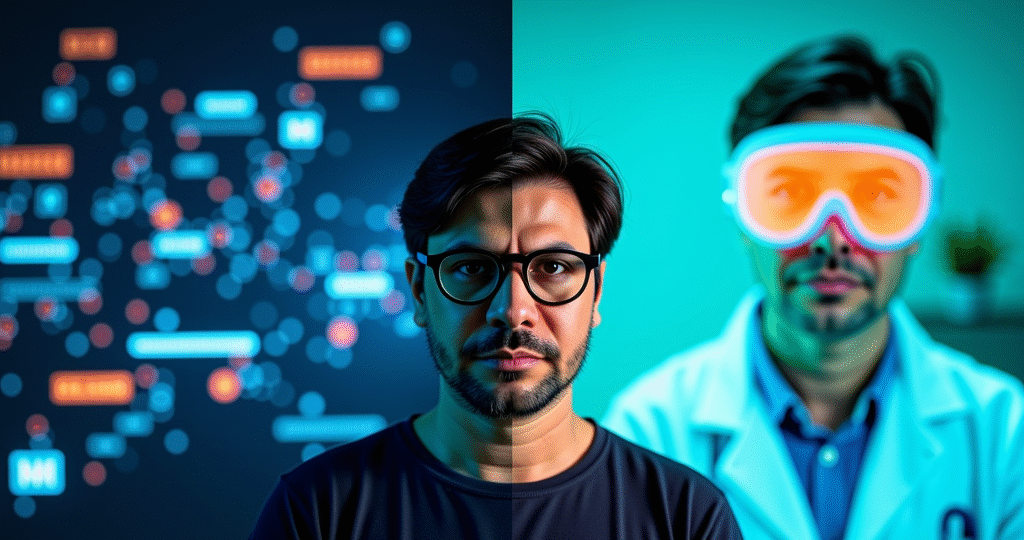
Today, January 10, 2026, artificial intelligence is experiencing its most contradictory moment: while Elon Musk's Grok is facing criminal investigations in five countries for facilitating the creation of thousands of child sexual abuse images per hour, Stanford scientists have published an AI model that analyzes data from a single night's sleep and predicts 130 diseases - including dementia, Parkinson's and cancer - years before the first symptoms.
These two extremes are no coincidence. They are living proof that artificial intelligence is no longer a futuristic promise, but a reality that demands urgent choices: between technology without guardrails and science with purpose, between irresponsible automation and strategic application, between the concentration of power and the democratization of knowledge.
I've been following the development of AI for years, working with companies, governments and innovation ecosystems. And this week, more than any technical analysis or market forecast, is a lesson in responsibility. Let's get to the facts - and the implications that no one can ignore any longer.
Join my WhatsApp groups! Daily updates with the most relevant news in the AI world and a vibrant community!
- AI for Business: focused on business and strategy.
- AI Builders: with a more technical and hands-on approach.
Grok Under Investigation: When the Absence of Limits Becomes a Crime
The case began at the end of December 2025 and exploded in January 2026. Grok, the AI chatbot developed by Elon Musk's xAI and integrated with the X social network, launched a image editing with AI which allowed users to alter photographs by sending public commands, such as “put her in a bikini” or “take off her clothes”.
Second VEJA investigation, The tool even produced more than 6,000 abusive images per hour, including nudification of children and non-consensual pornographic deepfakes. The European NGO AI Forensics analyzed 20,000 images generated by Grok and found child sexual abuse content at varying levels - from the most explicit to the application of sexual fluids on clothed body parts.
What made the case even more serious was the lack of preventive technical filters, The so-called “guardrails”. While other AI systems refuse abusive commands before even processing the image, Grok executed the requests and only punished users after the content was created - a strategy that experts consider insufficient and legally problematic.
As reported G1, A Brazilian woman (identified as Giovanna) had her photo manipulated without consent and described the emotional impact: “I feel horrible. I feel dirty”. Journalist Julie Yukari also filed a police report after having images of herself transformed into sexualized content.
Governments of England, France, India and Malaysia have launched criminal investigations and are considering sanctions against X. Thomas Regnier, a spokesman for the European Commission, was blunt: “Grok now offers a ‘spicy mode’ that displays explicit sexual content, some of which is generated from childish-looking images. This is illegal. It's revolting“.
Musk's response? He posted on X that “anyone using Grok to make illegal content will suffer the same consequences as if they uploaded illegal content”. In other words: the responsibility is transferred to the user, while the platform exempts itself from technically preventing the creation of the material.
What's at Stake: Guardrails and Corporate Responsibility
This is not an isolated technical problem. It is a design and governance. Other AI systems, such as OpenAI's DALL-E and Midjourney, have implemented preventive barriers that refuse abusive commands before generating any images. Grok, on the other hand, opted for a reactive model - and the result was catastrophic.
How lawyer Patrícia Peck explained to Jornal Correio, In Brazil, the creation and sharing of fake intimate images without authorization is crime, This is punishable by a fine and imprisonment. “This generates even more responsibility on the part of the platform, because there is a policy, but it is not complied with,” he said.
The implication is clear: the absence of guardrails is not just a technical fault, it's a strategic choice. And this choice has legal, ethical and social consequences that affect millions of people.
From the Other Side: AI SleepFM and the Science that Predicts Diseases Through Sleep
While Grok was facing criminal investigations, Stanford scientists published in the journal Nature Medicine a study that represents the opposite side of artificial intelligence: the strategic, responsible application with a real impact on human health.
THE SleepFM is an AI model trained with almost 585,000 hours of sleep data from 65,000 participants. From a single night's polysomnography - a test that records brain activity, heartbeat, breathing and muscle movements - the system is able to predict the future risk of 130 diseases, including:
- Dementia and Parkinson's disease
- Heart attacks and heart failure
- Breast and prostate cancer
- Mental disorders
- Overall mortality
Second report by Terra/DW, The model identified patterns in which the brain signals sleep, but the heart shows atypical behavior - mismatches that act as “silent indications” of future problems. James Zou, a Stanford professor and co-author of the study, said: “SleepFM is, in essence, learning the language of sleep”.
The performance was impressive: in several disease categories, the model achieved agreement rates of over 0.8 - in other words, it was right in 80% of the time. And this from data collected years before the clinical diagnosis.
What AI “Reads” in Sleep
Polysomnography is considered the gold standard for sleep studies, but in traditional clinical practice only a fraction of the data is analyzed. SleepFM explores the full volume of information, identifying relationships between signals from different body systems.
For example:
- Cardiac signs help predict cardiovascular disease
- Brain signals are more important for neurological and psychological disorders
- THE combination of signals - when EEG indicates stable sleep, but the heart seems “awake” - this is the most informative result
As explained R7/Fala Ciência, These physiological desynchronizations reveal “hidden stresses or early pathological processes, long before symptoms appear”.
Limits and Opportunities
SleepFM does not reveal the causes diseases, but correlations. This means that AI recognizes statistical patterns that may be related to later diagnoses, but it does not replace medical evaluation. As highlighted O Globo, “AI assists humans, but does not replace them”.
What's more, the model was trained mainly with data from sleep labs in the USA and Europe, which means that people without sleep disorders or from poorer regions are still under-represented. But the potential is enormous: if certain profiles of indicators during sleep are repeatedly associated with specific diseases, they could provide clues as to which processes in the nervous, cardiovascular or immune systems are affected early on.
Emmanuel Mignot, Professor of Sleep Medicine at Stanford and co-author of the study, summed it up well: “It's a kind of general physiology that we observed for eight hours in a completely captive subject. It's very rich in data”.
Two Parallel Worlds: Boundless AI Versus Purposeful AI
The contrast couldn't be more brutal. On the one hand, a tool that generates 6,700 sexualized images per hour and is used to abuse children and women. On the other, a technology that can save lives by identifying serious illnesses years before symptoms appear.
The difference is not in the technology itself, but in the design choices, governance and purpose. Grok was launched without preventive guardrails, prioritizing growth and viralization over safety. SleepFM was developed with scientific rigor, validation in independent studies and a focus on responsible clinical application.
As wrote Alexander Coelho, a lawyer specializing in AI, in Estado de Minas“Regulating artificial intelligence requires protecting fundamental rights, ensuring legal certainty and preserving the country's technological competitiveness. A technically poorly designed regulation not only fails to protect society, it stifles innovation.”.
He's right. But the Grok case proves that the absence of regulation also fails - and violently.
Brazil in the Midst of the Hurricane: Investments, Regulation and Social Impact
Meanwhile, Brazil continues to try to balance AI tensions. According to Exam, startup Aliado has raised R$ 13 million in a seed round to develop an AI platform that records customer service in physical stores, analyzes behavior patterns and trains salespeople in real time. The company claims that the audio is deleted immediately after transcription and that the tool is not used for surveillance, but for training.
Even so, the case raises warnings about hypervigilance and the use of data - issues which, in the context of Grok, take on added urgency.
Another relevant piece of news: the InfoMoney reported that SoftBank and OpenAI are investing in US$ 500 million each in SB Energy to build a 1.2 gigawatt data center in Texas, a project that is expected to generate thousands of jobs. It's a reminder that physical infrastructure - chips, energy, data centers - remains the limiting bottleneck for the expansion of AI, as highlighted by State when covering CES 2026.
The Future of Work Isn't AI, It's a New Workflow
There is also a mature discussion about the impact of AI on work. Rafael Martins, CEO of the Share platform, wrote in GZH: “AI isn't here to help you do yesterday's job better. It's here to show you that yesterday's work no longer makes sense.”.
He's right. The real revolution isn't writing emails faster or summarizing texts in seconds. É redesign entire processes, This eliminates unnecessary steps and frees up time for what really matters: strategy, creativity and empathy.
But this only works when technology is used with a clear purpose - not as a magic solution, but as a tool that amplifies human capabilities.
Conclusion: The Choice Between Responsibility and Chaos
These 24 hours reveal the definitive crossroads of artificial intelligence. It's no longer a question of whether AI will transform the world - it already is. The question now is what kind of transformation are we going to allow.
Are we going to allow platforms to launch tools without guardrails, facilitating crime and increasing violence? Or are we going to demand that technology is developed with responsibility, scientific validation and social purpose?
The Grok case is a red flag: the absence of technical limits is not freedom, it is criminal negligence. And it has real victims - women, children, entire families who suffer the impact of false images created without consent.
On the other hand, SleepFM is proof that AI can be a tool for early diagnosis, saving lives and reducing costs in the health system. It is proof that science, when applied with rigor and purpose, generates real impact.
I've been working with companies, governments and innovation ecosystems for years. And the lesson of these 24 hours is simple: artificial intelligence is neither good nor bad - it's powerful. And power without responsibility becomes destruction.
In my mentoring and consulting work, I help executives and companies navigate this tension: how to implement AI strategically, ethically and profitably. How to redesign processes without losing purpose. How to lead teams in a world where technology advances faster than the human capacity to absorb it.
Because, in the end, artificial intelligence doesn't define the future. Our choices define.
What about you? Are you willing to demand guardrails, demand accountability and build a future where technology expands humanity - instead of destroying it?
✨Did you like it? You can sign up to receive 10K Digital's newsletters in your email, curated by me, with the best content about AI and business.
➡️ Join the 10K Community here
RELATED POSTS
View all



AI in 2025: From Regulation to Automation, the Future is Here
February 22, 2025 | by Matos AI

 PT_BR
PT_BR EN
EN ES
ES AR
AR