

How I Delivered 20X More Spending 10X Less: The Future of AI Consulting
January 12, 2026 | by Felipe Matos

Better, faster and cheaper. Lessons from a project that transformed what would have been a simple report into an interactive digital platform. A glimpse into the future of work amplified by artificial intelligence. Spoiler: I didn't do this using assistants like ChatGPT
I. The Project That Changed My Vision
When Sebrae and ABGI invited me to produce a report on public policies for innovation ecosystems around the world, the scope was clear: analyze market failures, map relevant policies, benchmark internationally and deliver a structured document with recommendations.
I started as any consultant would. With 50 failures to research and different angles to cover, I would need to do hundreds of searches. Even using AI tools like Perplexity, it would take hundreds of prompts. It was then that I made a decision that would change everything: “What if I use AI to automate searches?”
Join my WhatsApp groups! Daily updates with the most relevant news in the AI world and a vibrant community!
- AI for Business: focused on business and strategy.
- AI Builders: with a more technical and hands-on approach.
I created a research agent with vibe coding and search APIs, such as Perplexity itself. My agent analyzed each of the 50 failures and generated different related search terms. I left it running at night and woke up to a surprise: the agent had made 16,400 searches in 10 languages. It would be humanly impossible to analyze all these results. So I made the decision to use even more automated AI to analyze all this material.
I created a few more specialized agents: one translated, another classified, another evaluated. There were more than 200,000 analyses, trying to understand the results and map related public policies, generating a very rich and complete material that I would never have been able to produce manually.
It was then that I realized: I can't just put it in a 200-page PDF.
The result was the creation of AI magnifier - an interactive web platform where anyone can explore the data, visualize semantic relationships through graphs, filter information and converse in natural language with a specialized agent. Built entirely without code, using AI.
II. The Numbers That Prove the “Impossible”
The project AI magnifier in numbers:
- 16,400 automated searches in multiple sources and languages
- 7 specialized AI agents
- 220,000+ analyses carried out
- 20+ orchestrated AI tools
- 10+ languages processed
- ~2 months of execution
- 1 consultant + AI
The impossible bill: If each search takes 5 minutes, that's 171 working days of research alone. Adding up the 220,000 analyses, that would be more than 12 years of work. AI allowed me to deliver in two months what would have taken more than a decade.
Compare this with the traditional method estimated for the same scope:
| Dimension | Traditional Method | Method with AI (realized) |
|---|---|---|
| Time | 12-24 months* | 2 months (10x less) |
| Team | 5-8 specialist consultants + 2-4 developers | 1 consultant + AI agents |
| Investment | R$ 1.2 to 3 million | Fraction of the cost (10x less) |
| Deliverable | 200-page PDF report + PowerPoint presentation | Interactive web platform + live database with thousands of searchable records and analyses |
| Post-delivery value | Decays quickly (document becomes outdated) | Maintains/grows (updatable platform) |
* - considering a complete team
III. Doing more and better with less
As a consultant from the project planning school, I have always believed in the maxim of the iron triangle - or triangle of constraints. It states that a project can only be optimized for one of three dimensions at a time, compromising the other two. These are: cost, time and quality. Need to speed up delivery? It will cost more and will probably be of lower quality. Want it cheaper? The quality will be lower and deadlines may be compromised. More quality? It will cost more and take longer.
But the AI has broken the iron triangle! With AI, it is possible to do things better, faster and cheaper - all at the same time.
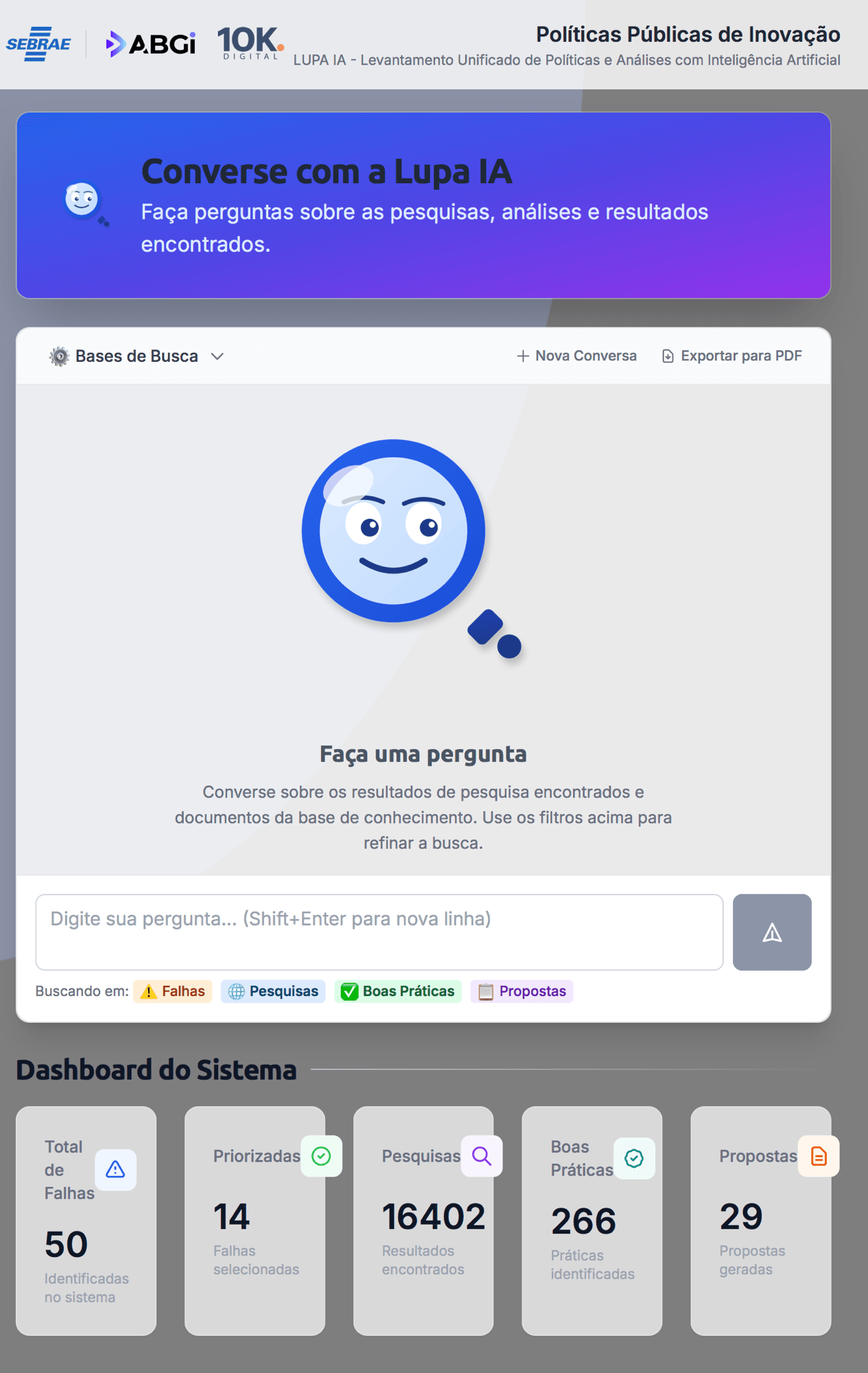 What would have been a 200-page report has become an interactive platform, built entirely without code with AI.
IV. The 7 Paradigmatic Shifts
The use of automation with AI brings a paradigm shift to consultancy work and this project is a perfect example of this. Taking a deeper look at their process, I identified 7 points of paradigm shifts that differentiate the traditional method from the new AI-powered model.
1. From “What” to “How” - The Change of Role
Before, I ran analyses manually. Now, I teach AI agents to do it for me. I've become an architect of analytical processes, not an executor.
In the project, I created a classifier agent. In the first round, I obtained 70% accuracy. After calibration cycles, I reached 97%. My role was simply to validate the 3% of ambiguous cases.
The consultant stops being an operator and becomes a conductor.
2. From “One-off Reports” to “Continuous Platforms”
Deliverables are no longer static documents but living platforms: interactive dashboards, structured databases, conversational agents.
Lupa AI offers dynamic visualizations, semantic relationship graphs, natural language chat and customized export. A PDF report begins to lose value as soon as it is delivered; a platform continues to generate ROI.
3. From “Limited Capacity” to “Virtually Unlimited”
With AI, limitations of time, language and search bias disappear. I discovered policies from Estonia, New Zealand and Singapore that I probably wouldn't have found through manual research - my search would have had an Anglophone bias focused on “obvious” countries.
4. From “Solo Analysis” to “Hybrid Intelligence”
AI does what machines do best: process volume, recognize patterns, translate. I do what humans do best: judge, contextualize, create meaning. Together, we achieve what we could never achieve alone.
AI turns consultants into multi-specialist generalists: breadth with depth.
5. From “Hours” to “Value”
In the traditional model, clients paid for hours spent. With AI, you pay for results. The “good, fast or cheap - choose two” trade-off has been broken.
How do you sell “R$ 500K, 6 months, PDF” when your competitor sells “R$ 80K, 6 weeks, web platform”?
6. From “Excel + PPT” to “AI Stack”
The consultant's skillset has evolved: in addition to traditional knowledge, it is now necessary to master advanced AI assistants, vibe coding (code generation via prompts) and agent orchestration.
AI for consultants today is like Excel in the 90s: an indispensable tool whose mastery makes a huge difference.
It wasn't an accident - it was intentional learning. Three years ago, I used ChatGPT for basic brainstorming. A year ago, I started vibe coding. In the Sebrae project, I orchestrated 7 agents + 20 tools + a complete web platform.
7. From “Analytical Thinking” to “Systems Thinking”
This is the most fundamental change. Analytical thinking breaks down problems into sequential silos. Systems thinking understands interdependencies, creates feedback loops and produces emergence.
In the project, I didn't do all the searches first and then translate and classify. I created a system with continuous feedback: search → translation → classification → identifying patterns → adjusting criteria → new targeted searches.
Using AI with systems thinking is the difference between ChatGPT as “enhanced Google” and systems that multiply their impact by 10-20x.
V. The Skills Gap
These 7 changes are creating a chasm between AI-fluent and traditional consultants. The biggest challenge isn't technological - it's human. The tools exist and are accessible. The bottleneck is the ability to develop new skills to use them to their full potential.
The timeline: In 2026-2027, we are at the tipping point. In 2028-2030, knowing how to use AI for automation will be a minimum requirement. Those who start now will be ahead; those who wait will be lagging behind.
Think about how mastering Excel was a differentiator in the 2000s. I'm not talking here about simply using Excel for basic spreadsheets, but mastering advanced use, with complex formulas and macros. It's the same with AI now. Not simply using AI assistants to make good prompts, but mastering complex automations and building AI-based systems and agents.
The good news: It's not about replacing a profession. On the contrary. Good consultants will have their work and productivity multiplied by AI. They don't need to become data scientists, they need to learn agent orchestration and automation with AI. Your domain knowledge will remain valuable - you just amplify it.
VI. The Future Is Hybrid
AI does not replace consultants. AI multiplies the good.
The consultant of the future (which is already present) is:
- Architect, not executor
- Curator, not compiler
- Strategist, not operational analyst
- Orchestrator hybrid intelligence
Work becomes more interesting, not less. Less mechanical tasks, more strategic judgment, creativity and storytelling.
The opportunity: Democratize elite consulting (SMEs and NGOs gain more access), solve complex problems at scale and create multiplied impact.
The future of consulting is not human OR machine. It's human AND machine, working in partnership to achieve what they could never achieve alone.
That future has already begun. The question is not IF it will arrive. The question is: are you going to look at it from the outside or build it from the inside?
VII. Why Most Are Not Adapting
If the tools are available, why aren't most consultants adapting? There are psychological and practical barriers:
Psychological barriers:
- Denial“AI will pass, it's just hype” (the same thing they said about Excel, email, the internet...)
- Overestimation of singularity: “My work is too creative for AI” (until I discovered that AI is a tool to amplify creativity, not a substitute)
- Self-sabotage: “I'm not technical, I can't learn” (but you've learned Excel, PowerPoint, Google Docs... why should AI be any different?)
- Status quo bias: “I've always done it this way, it works” (until it stops working when customers choose your AI-fluent competitor)
- Fear of irrelevance: Paradoxically, fear of being replaced leads to avoidance of AI, which guarantees obsolescence
Practical barriers:
- They don't know WHERE TO START:
- Dozens of tools available (ChatGPT, Claude, Gemini, Perplexity, Cursor...)
- Tutorials galore, but little strategic guidance
- Huge gap between “use ChatGPT for email” and “create multi-agent system”
- Choice paralysis: which tool to learn first?
- Lack of applied examples:
- Generic tutorials (“Introduction to ChatGPT” - 100 hours of video on the basics)
- There are no real consulting case studies (so far - hence my motivation for sharing this)
- Gap between theoretical knowledge and practical application
- Lack of time/space to experiment:
- Stuck in traditional projects that take up all their time
- No room for experimentation (projects billed by the hour don't allow for “wasting time” learning)
- “I don't have time to learn” (irony: not having time to learn what will give you 10x more time)
- Steep learning curve: 6-18 months to develop real fluency
- Requires persistent experimentation, failures, iterations
- It's not a weekend course - it's a journey of transformation
Results: Collective inertia creates opportunities for those who act. But inertia is no excuse - it's an existential risk.
The Good News - There's Time and I Can Help
After glimpsing the future with the Sebrae LUPA project and observing the skills gap, I decided to act to help democratize this knowledge and support professionals in this transition to the AI era.
I founded 10K Digital with a clear mission: to democratize access to excellent results through AI. The name is no coincidence: 10K = 10,000. We don't want to do 10% better. We want to do 10,000x more. Exponential multiplication, not incremental improvement.
The real bottleneck now is not running projects with AI. It's training more people so that they too can carry out projects like this.
That's why I've built advanced AI training programs for consulting professionals.
→ Go here to find out more about the first masterclass!
The real pain I'm solving: Talented consultants and professionals don't know where to start. They waste time (and motivation) on the wrong tools. They get frustrated and give up prematurely. And the skills gap widens because a structured bridge is missing.
What I'm Building
→ Go here to find out more about the first masterclass!
In the coming months, I'll be launching educational resources focused on 4 fundamental pillars:
🎯 1. Vibe Coding without Being a Developer
- Create dashboards, APIs, automations via prompts
- Use Claude Code, Lovable, Cursor, Replit, etc. effectively
- Rapidly iterate on prototypes
- Turning analysis into products (platforms, not reports)
- Case studies: Interactive dashboard (like AI Magnifier), database chat, dynamic visualizations
2. orchestration of agents for consultants and non-technical professionals
- How to coordinate multiple specialized agents
- Designing complex workflows (not task lists, but systems)
- Integration of dozens of AI tools
- System calibration via human feedback
- Case studies: Automated research (as I did at Sebrae), scale analysis, multi-source synthesis
Systemic Thinking for Hybrid AI + Human Projects
- Think systems, not isolated tasks
- Designing feedback loops
- Global vs. local optimization
- Identify leverage points in complex systems
- Case studies: Redesigning a traditional consulting workflow for a hybrid model
🎯 4. case studies by domain
- Research at scale: How to replicate the Sebrae project (automated mass data analysis)
- Business strategy: Competitive analysis augmented by AI
- Management: Intelligent organizational diagnostics
- Marketing: Automated market research
- Each case with complete code, prompts, and methodology
Learning methodology:
- Learning by DOING - Practical projects from day one, not just theory. You don't watch passively; you build actively.
- Tool curation - which ones to use, when, why. Avoid choice paralysis (there are 50+ tools; you need to master 5-7 essential ones).
- Community of practice - Peer learning, sharing discoveries. You are not alone in your journey.
- Applied mentoring - Review of real projects, not just pre-recorded lessons. Feedback on YOUR work, your specific questions.
- Structured progression - From basic to advanced with clear milestones. You know exactly where you are and where you're going.
Why Me?
Why should you trust me to guide you on this journey?
1. I'm not a theoretician - I've carried out real projects with measurable results
- Lupa IA / Sebrae is up and running, as are several other projects
- Concrete results: you can test the platform now: https://dev.10k.digital/sebrae-app
- It's not theory - it's living proof of concept
2. I'm not a traditional developer - I learned vibe coding as a non-technical person
- I have an affinity, but I don't have a degree in computer science
- I didn't program professionally before AI
- I learned how you need to learn: via prompt engineering and vibe coding, without writing code directly
- I know exactly the pain you'll have - because I've lived it
- I know the shortcuts and the traps
3. I've lived through the transition - I know the pitfalls
- 18 months of experimentation (many mistakes along the way) - it may not seem like much, but “in AI times”, it's a long way off
- More than a thousand hours testing the wrong tools (so you don't have to)
- Mistakes that cost time: “I spent 2 weeks trying to do X in Y way, when I should have done Z from the start”
- Now I can give you these shortcuts
4. I have “skin in the game” - my company and reputation depend on it
- 10K Digital is consulting augmented by AI
- If it doesn't work, I have no business
- I'm not just an educator - I'm an active practitioner
- I'm betting my career on it (it's not a hobby or a side project)
I've glimpsed the future of my own work. And I can honestly say: it's exciting, not scary.
I don't want to keep this knowledge. I don't want it to be the privilege of a few. I want to democratize it.
Hence my decision to create educational resources. Hence this article. Hence my commitment to making the transition less painful for other consultants.
The Final Invitation
1. If you want to see for yourself:
- Visit https://dev.10k.digital/sebrae-app and https://aihub.10k.digital
- Explore the Lupa AI platform and the 10K AI Hub
- Talk to Agent Lupa about innovation policies and Matos about AI-related opportunities
- See what's possible when specialized human knowledge meets AI
- Imagine what you could create for yourself and your customers
2. If you are a consultant:
- Ask yourself: “In two years” time, do I want to be ahead of the curve or running behind?"
- Start today. Don't wait until you're forced to by the competition.
- Connect with me at LinkedIn and sign up to follow the resources I'm creating
- Join the journey of transformation
3. If you are a consulting client:
- Start expecting more from your consultants: more quality, faster and with more benefit for the same cost
- Ask your suppliers: “How do you use AI in projects?”
- Don't accept any more “6 months and R$ 500K” proposals when “6 weeks and R$ 80K” is feasible
- Demand interactive platforms, not just static reports
- You deserve more value for your investment
The Phrase That Stays
The future of consulting is not human OR machine.
It's human AND machine, working in synergy to achieve what we could never achieve alone.
That future has already begun.
The question is not IF he will arrive.
The question is: are you going to observe it from the outside or build it from the inside?
I chose to build.
And I invite you to do the same.
→ Go here to find out more about the first masterclass!
✨Did you like it? You can sign up to receive 10K Digital's newsletters in your email, curated by me, with the best content about AI and business.
➡️ Join the 10K Community here
RELATED POSTS
View all

The AI Agent Revolution: Between Advances, Regulation and Dilemmas
January 11, 2025 | by Matos AI
What to Expect from AI Regulation in 2025: Global Scenario and Impacts for Startups
January 6, 2025 | by Matos AI
 PT_BR
PT_BR EN
EN ES
ES AR
AR