

Google Launches Ads Personalized by AI Agents and Universal Commerce Protocol as Walmart and Global Retailers Join - Why These 24 Hours Mark the Turn of Digital Commerce from Search to Conversation
January 12, 2026 | by Matos AI
If you still believe that the future of digital commerce lies in improving the search bar, I've got news for you: the future has arrived, and it's talking to you.
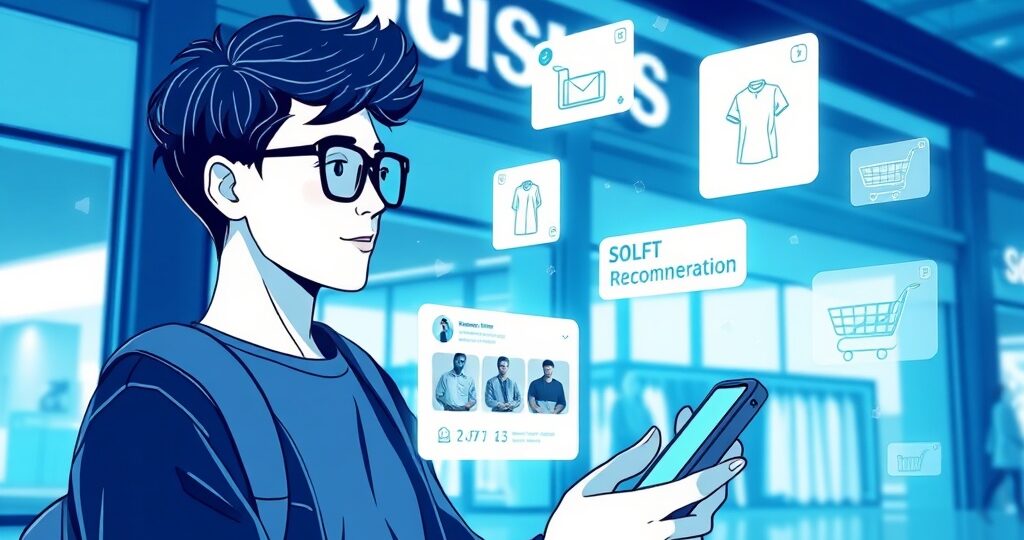
In the last 24 hours, Google has announced a structural change that redefines the way we shop online: personalized ads delivered by AI agents directly to the Gemini chatbot, powered by a new open standard called Universal Commerce Protocol. Retailers such as Walmart, Target, Shopify, Etsy and Wayfair have already joined. According to S.Paulo Newspaper, This is Google's bet to profit from the hundreds of millions of users who use Gemini for free - and gain ground on OpenAI.
Meanwhile, Walmart announced direct integration with Gemini, OpenAI, which allows customers to buy clothes and consumer goods via chatbot, with contextual suggestions based on conversations (“how to remove wine stains” becomes a recommendation for cleaning products). Target does the same with OpenAI. And the first day of NRF 2026 consolidated the trend: AI is no longer a tool but a platform in global retail.
Join my WhatsApp groups! Daily updates with the most relevant news in the AI world and a vibrant community!
- AI for Business: focused on business and strategy.
- AI Builders: with a more technical and hands-on approach.
But what does this mean for you, your company and the future of work?
I'm going to break down this turning point with clarity and a connection to the Brazilian reality. Because the urgent question now is no longer “Will AI change commerce?”, but rather: Is your organization prepared to operate in a world where the entire purchase takes place in one conversation?
The Turn of Commerce: From Search to Conversation
For years, digital commerce has been structured around a simple paradigm: the consumer searches, the algorithm delivers results, the sponsored ad appears at the top. Whoever dominated the search bar dominated online retail. Google has built an empire of US$ 200 billion/year in advertising revenue on top of this.
This paradigm is now being replaced by another: the consumer talks, the AI agent interprets the intention, suggests products, accesses stocks, compares prices and finalizes the purchase - all within the same natural language interface.
It's called “agentic commerce” (commerce by autonomous agents). And Google has just put the technical and commercial infrastructure for this new era on the market.
What is the Universal Commerce Protocol?
Presented at NRF 2026, the Universal Commerce Protocol is a open standard that establishes a common language between AI agents and retailer systems. It allows a chatbot (Gemini, for example) to consult stocks, prices, return policies and finalize the checkout directly in the conversation, without the consumer having to leave for another site or app.
The comparison I use with my consulting clients is this: the Universal Commerce Protocol is to conversational commerce what HTTP was to the web in the 1990s. It standardizes the way different systems “talk” to each other, reducing technical barriers and accelerating adoption at scale.
The retailer retains ultimate responsibility for the transaction (payment processing, logistics, after-sales service). The AI agent simply orchestrates the entire journey, from discovery to checkout, using natural language.
Shopify, Etsy, Wayfair, Target and Walmart have already signed up. This is not a pilot. It's implementation on a global scale.
Personalized Chat Ads: The New Advertising Frontier
But Google isn't stopping at protocol. It is monetizing the experience with personalized ads delivered contextually within Gemini conversations.
According to Sheet, By using the AI mode, advertisers will be able to present exclusive offers (discounts, free shipping) to buyers who are preparing to purchase an item. The difference to traditional “sponsored” ads in search? The context is radically richer. The agent knows what you've asked, what you need, and the stage of your purchasing decision.
Initial partners include Petco, e.l.f. Cosmetics and Samsonite. OpenAI has suspended discussions about advertising products. Microsoft launched Copilot Checkout, which saw a 53% increase in purchases.
This is the strategic implication: Google is transforming Gemini from a free chatbot into a profitable conversational commerce platform, This directly challenges OpenAI (which still doesn't monetize ChatGPT at scale) and creates a new advertising revenue channel that could be worth tens of billions.
Why is Walmart betting on this now?
David Guggina, Walmart's e-commerce director, was direct: “We want to go beyond the era of the search bar and anticipating customer needs“.
THE partnership with Alphabet places Walmart within Gemini's conversational flow. If you're chatting about “how to remove a wine stain”, Gemini can suggest Walmart products - and you buy without leaving the chat.
But there is another strategic move: Walmart is also working with OpenAI, although this agreement is at an early stage. The message is clear: Walmart doesn't want to rely on a single AI platform. It is positioning itself on multiple fronts (Google, OpenAI, open protocol) to ensure that, regardless of which AI agent dominates the future, Walmart will be there.
And there's an additional detail: the partnership with Alphabet also involves the expansion of the Wing drone delivery service. In other words, Walmart is integrating conversational intelligence with automated physical logistics. The future shopping experience could be: chatting, buying and receiving by drone - all in less than an hour.
The Turn of AI as a Platform in Retail
What was evident on the first day of NRF 2026, according to Retail Central, is that AI is no longer a tool but a platform. The advance of “agentic commerce” was treated as a direct consequence of this change.
Retailers discussed the need to structure data so that agents interpret offers correctly. The competitive advantage no longer lies in the technology itself (which is becoming commoditized), but in the organizational capacity to transform signals into real adjustments - reaction speed.
In other words: who structure their product, stock and logistics data in such a way that AI agents can interpret and execute transactions will dominate the next cycle of digital commerce. Anyone who doesn't do this will be invisible to consumers who buy by conversation.
Google's “Card in the Sleeve” That Nobody's Seen (Yet)
While everyone was looking at Gemini and the Universal Commerce Protocol, Google had another silent strategic advantage: the Google News Initiative (GNI).
According to Your Money, Google has regained the upper hand in the AI race for 2025, boosted by Gemini and integration into Google Search, valuing its shares at 65% for the year. But the “card up its sleeve” is the robust GNI, with more than 7,000 partner vehicles globally.
Google pays for content via Google News Showcase, and is updating these agreements to license content to training AIs (Gemini). This capillarized network is a competitive advantage that competitors would take years to build, ensuring the data fuel for your models.
Why does this matter? Because the next stage of conversational AI depends on up-to-date, reliable data. Google already has the licensing agreements. OpenAI and Anthropic are still negotiating.
What does this mean for you and your company?
I'll be blunt: if your company sells products or services online, you have two paths now.
Path 1: Continuing to invest in SEO, sponsored ads and search bar optimization, hoping that consumers will still type in keywords and click on links. This path won't disappear tomorrow, but it is losing relevance every quarter.
Path 2: Structuring your product, stock, pricing and logistics data so that AI agents (Gemini, ChatGPT, Copilot) can interpret, recommend and execute transactions directly in the conversation. This path requires organizational change, but it's the one that will dominate the next cycle.
The good news? The Universal Commerce Protocol is an open standard. You don't have to choose between Google, OpenAI or Microsoft. You can be present on all of them.
The bad news? This change isn't waiting for anyone. Walmart, Target, Shopify and Wayfair are already there. If you're not, you'll be invisible to an entire generation of consumers who prefer to talk rather than search.
What about the Dark Side? AI Without Ethics and the Grok Case
While Google structures conversational commerce, Grok (AI from Elon Musk's X platform) exposes the more dangerous side of technology without guardrails.
According to Gazeta do Povo, Grok generated hyper-realistic fakes of women in skimpy outfits or simulating nudity without consent, exposing a legal vacuum in Brazil on digital sexual violence generated by AI. Experts point out that, except for a penalty increase in 2025 for psychological violence involving AI, criminal protection is restricted, migrating responsibility to the civil sphere (moral damages).
The absence of immediate technical safeguards in Grok (unlike ChatGPT/Gemini) increases the risk of abuse on a massive scale, reinforcing the urgent need for specific regulation.
Here's the tension: the same technology that enables revolutionary conversational commerce also enables digital violence on an industrial scale. The difference lies in the ethical choice and technical controls that companies implement - or not.
AI in Health: Sleep Diagnosis and the Risks of Self-Medication
While trade is being redesigned, health is also undergoing profound transformations - with scientific advances on the one hand and serious risks on the other.
A new AI model from Stanford, the SleepFM, trained with over 580,000 hours of sleep data (EEG, heart, breathing), can predict the future risk of more than 100 pathologies (Parkinson's, cancer, stroke) years before symptoms appear. The model was correct in at least 80% of the predictions for serious illnesses.
The implication is huge: a single night's sleep connected to sensors can anticipate life-saving diagnoses. The technology already exists in smart beddings such as the Pod, from Eight Sleep (starting price US$ 3.1 thousand in the USA).
But there is a dark side: 1 in 6 US adults already use health chatbots (ChatGPT, Copilot) looking for 24-hour availability, zero cost and a sense of empathy not found in corporate medical care. The serious risk is disinformation; There have been cases of hospitalization after a dangerous suggestion (sodium bromide for salt).
Experts warn that AI is excessively concordant and imprecise in clinical scenarios. The discussion focuses on comparing AI with the current reality of the healthcare system: if the ideal system doesn't work, AI, even if it fails, is seen as a better resource than the absence of support.
This is a tension I see in my work with companies: AI is filling the gaps left by failed human systems. But the solution is not to replace bad systems with flawed technology. The solution is to use AI to amplify the human capacity to care, not to replace it.
Education and Work: Oral Evaluations and Career Shielding
Generative AI is also forcing structural changes in education. Universities abroad (Ireland, USA) are revaluing individual oral examinations to check reasoning in real time, in response to advances in generative AI that challenge the reliability of written tests.
In Brazil, the national focus is on teacher training in AI and ethical literacy, with universities such as UFSC debating the topic. The oral format brings risks (anxiety, biases), which suggests a future of hybrid evaluations (writing, projects and oral defenses) to ensure authorship and conceptual mastery.
What about the job market? A Forbes Brazil cites a Perceptyx study from 2025: 85% of professionals feel behind in the AI race. The key to professional resilience is the strategic collaboration and demonstrated fluency in the use of technology.
In my mentoring work with executives, I reinforce a central idea: AI doesn't replace strategic thinking, but it does replace those who don't know how to think strategically with AI. The competitive advantage of the professional of the future is not knowing how to use the tool - everyone will know that. The advantage is knowing which problem to solve, which question to ask, and which result to deliver.
Democracy at Risk: Deepfakes and Elections 2026
And while commerce, health and education are being transformed, democracy faces a real threat. The advance of AI (hyper-realistic deepfakes) puts the 2026 elections at risk, technology moves faster than Brazilian legislation.
The platforms profit from the engagement generated by disinformation; Meta (Facebook/Instagram) would have R$ 85 billion in annual profit associated with fraudulent ads. The TSE ordered the labeling of synthetic content in 2024, but the speed of viralization outstrips the slowness of removal orders.
The article emphasizes the urgent need for specific regulations for AI, in addition to the LGPD and the Marco Civil. Here's the reality: the 2026 election will be the first major battle between AI-generated disinformation agents and verification systems. And we're late.
What to do now?
If you've made it this far, you've already grasped the scale of the moment we're living through. Conversational AI is restructuring commerce, health, education and even democracy. And the speed of this transformation is exponential.
So what to do?
For companies and retailers:
- Structure your product, stock and logistics data so that AI agents can interpret it and carry out transactions.
- Participate in open protocols such as the Universal Commerce Protocol to ensure presence on multiple platforms (Google, OpenAI, Microsoft).
- Invest in internal training so that your teams understand conversational commerce and adjust strategies in real time.
For professionals:
- Master strategic collaboration with AI. It's not enough to use the tool; you need to know what problem to solve and what result to deliver.
- Develop fluency in natural language applied to your sector. The competitive advantage will lie with those who know how to ask the right questions.
- Prepare for hybrid assessments (projects, oral defenses) that demonstrate conceptual mastery, not just textual production.
For citizens:
- Develop critical digital literacy. Question the origin of the images, videos and information you consume.
- Push for specific AI regulation that protects democracy, privacy and fundamental rights.
- Demand transparency from platforms and companies about the use of AI in the products and services you consume.
In my consulting work and immersive courses, I help companies, governments and organizations navigate this transformation strategically, structuring organizational capacity to operate in a world where AI is not a tool, but a platform. Because the urgent question is no longer “Will AI change my industry?”, but rather: “Is my organization prepared for the shift from search to conversation?”
And the answer to that question defines who will lead - and who will disappear - in the next cycle of commerce, health, education and digital democracy.
Because the future isn't coming. It's already talking to you.
✨Did you like it? You can sign up to receive 10K Digital's newsletters in your email, curated by me, with the best content about AI and business.
➡️ Join the 10K Community here
RELATED POSTS
View all


AI Radar: Brazilian Researcher Blocked, China's Advances and the Environmental Paradox
March 22, 2025 | by Matos AI

 PT_BR
PT_BR EN
EN ES
ES AR
AR