


All blog posts
Insights on startups, AI, innovation, the future of work and technology education. Practical strategies for impact businesses and digital transformation.


Why 90% of Companies Still Resist AI — And How Context Engineering Can Change the Game
July 21, 2025 | by Matos AI


621% of Workers Want to Automate Tasks with AI — Why This Reveals the Future of Work
July 19, 2025 | by Matos AI



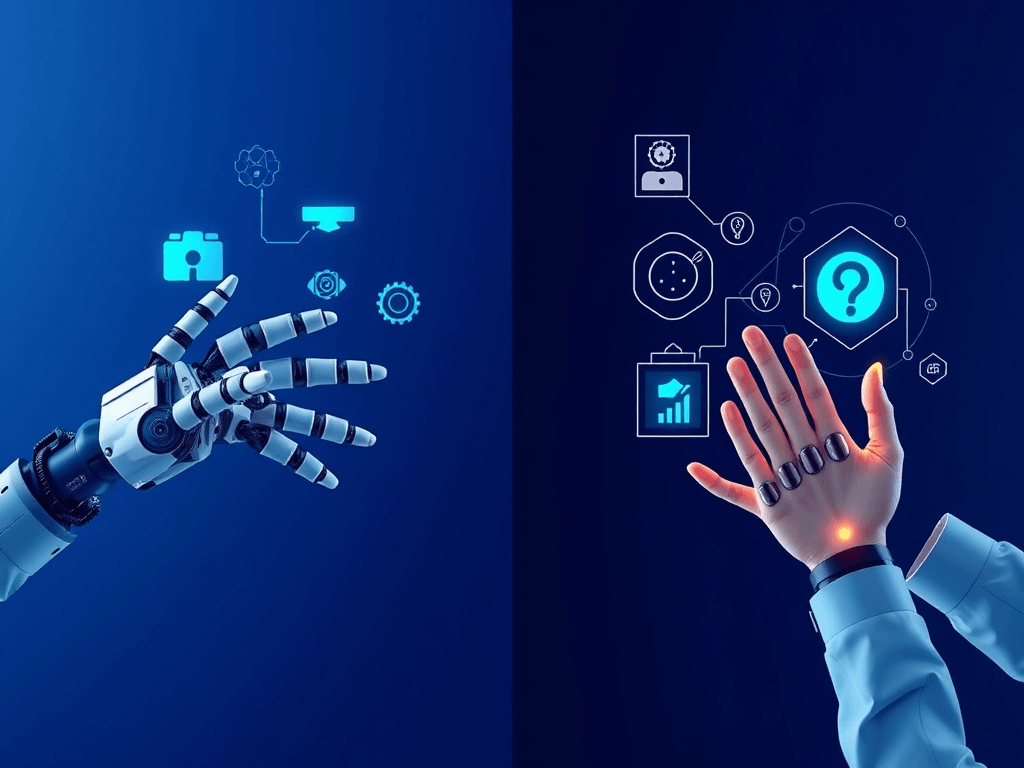




Artificial intelligence is everywhere—at least in corporate discourse. In the first quarter of 2025, 441,000 S&P 500 companies mentioned AI in their financial conference calls. Jamie Dimon, CEO of JPMorgan Chase, stated that his bank has 450 use cases for the technology. But here's the reality that no one wants to admit: according to the US Census Bureau: Only 101,000 companies use AI in a meaningful way.
This discrepancy between hype and reality is no coincidence. It's a symptom of something much larger happening within corporate structures—one that has direct implications for the future of work and business in Brazil.
The Tyranny of the Inefficient: Why Middle Managers Sabotage Innovation
In my experience accelerating startups, I've always observed that the best innovations face resistance precisely where they least expect it: in the middle of the hierarchy. UBS bank identified that corporate adoption of AI has disappointed, and the barriers go far beyond technical issues.
The phenomenon that experts call the “tyranny of the inefficient” explains a lot: organizational structures and people delay labor-saving advancesWhy? Because middle managers, who hold real authority in companies, can veto or delay changes promoted by senior management.
Steve Hsu, an expert cited in the research, points out that these managers fear that automation could threaten their positions, adopting defensive behavior. It's an understandable human reaction, but it creates a paradox: the companies that most need to transform are the ones most resistant to change.
The Growth of Resistance Areas
The numbers are revealing: the presence of in-house lawyers grew 27% in a decade, while areas such as human resources have expanded 40% in the US. These areas, concerned with compliance and regulation, naturally create barriers to the adoption of new technologies.
This reminds me of a conversation I had recently with a lawyer friend, curiously similar to the account of columnist Rafael Martins at GZHThe legal profession is moving from fear to curiosity, but there is still a long way to go.
Meanwhile, AI Consumes Real Infrastructure
Paradoxically, while companies hesitate to adopt AI, the technology's energy demands are forcing infrastructure expansions. binational hydroelectric plant Itaipu is studying the construction of two additional turbines — a 10% increase in capacity — driven primarily by the growth of AI and cryptocurrency mining data centers in Paraguay.
General director Enio Verri considers this expansion “inevitable”, and the numbers justify it: Paraguay projects to consume 50% of Itaipu's energy by 2035, compared to the current 31%. This is the real physical impact of the digital economy in action.
But this energy demand raises important environmental issues. study published in Frontiers in Communication revealed that models with elaborate reasoning capabilities can issue up to 50 times more CO2 than models that respond concisely.
The Environmental Cost of Precision
Here's a fascinating trade-off: there's an inverse relationship between accuracy and sustainability. More accurate models tend to consume more energy and emit more carbon. Questions that involve complex reasoning generate up to six times more CO2 than simple questions.
This leads us to an important reflection: we need to be more conscious about how we use AI, asking for more succinct responses and using technology thoughtfully.
AI as a Tool of Political Disinformation
The dark side of the democratization of generative AI appeared dramatically when Donald Trump posted an AI-generated video showing Barack Obama being arrestedThe one-and-a-half-minute video mixes real footage with computer-generated scenes, creating a completely false narrative.
This episode illustrates how AI can be used to spread potentially polarizing misinformation. The increasing quality of these synthetic videos makes it difficult to distinguish reality from fiction, especially for those unfamiliar with the technology's limitations and capabilities.
Rethinking the Future: Decentralized Models and Emergent Intelligence
As we grapple with current challenges, researchers are already thinking about the next step. article in Forbes Brazil explores theories about artificial general intelligence (AGI), proposing a decentralized model inspired by the functioning of the human brain as multiple interconnected machines.
Abhishek Singh’s “CHAOS Theory 2.0” suggests that decentralization, through multiple agents interacting with local protocols, can overcome limitations of centralized systems, generating higher emerging intelligence.
It's a fascinating concept that echoes natural patterns like ant colonies and human societies. Perhaps the future of AI isn't a central "big brain," but a distributed collaborative network.
The Real Impact on the Legal Profession
Returning to the current reality, the transformation is already happening in specific sectors. Firms like Allen & Overy already use tools like Harvey to generate minutes and assist decisions, while in Brazil systems such as Linte, Turivius and Juridoc are advancing in the Judiciary.
A Goldman Sachs study indicates that up to 44% of legal tasks can be automatedBut this doesn't mean the end of lawyers—it means a transformation in the value they deliver. The difference will be the human capacity to think strategically, argue complex arguments, and deal with social and emotional nuances.
Lessons for Leaders and Entrepreneurs
What can we learn from this seemingly contradictory scenario? First, that resistance to change is normal and predictable. Second, that companies that overcome these organizational barriers will gain significant competitive advantages.
In my experience mentoring startups, I see three strategies working:
- Start small: Implement AI in specific, low-risk processes
- Educate teams: Reducing fear through knowledge
- Measure results: Demonstrate tangible value before expanding
Market forces tend to favor technological adoption, as historically occurred with the tractor and the personal computer. But companies that depend on recouping large investments in data centers may not have time for slow organizational change processes.
The Time to Act is Now
The discrepancy between hype and reality in AI adoption isn't necessarily a bad thing. It represents an opportunity for companies and entrepreneurs who can navigate the organizational and technical barriers intelligently.
While 90% companies are still hesitant, the first 10% are already reaping the real benefits of the technology. The question isn't whether AI will transform business—it already is. The question is whether your company will be at the forefront or fall behind.
The future belongs to those who can balance technological optimism with organizational realism, environmental sustainability with operational efficiency, and disruptive innovation with social responsibility.
In my mentoring work, I help startups and companies navigate precisely these complexities—turning resistance into opportunity and hype into concrete results. Because in the end, AI is just a tool. What matters is how we use it to create real value and build a better future.
 PT_BR
PT_BR EN
EN ES
ES AR
AR