

Sora 2 Becomes a Phenomenon While Trump Uses AI to Attack Protesters - Why This Week Revealed the Two Extremes of Artificial Intelligence
October 20, 2025 | by Matos AI
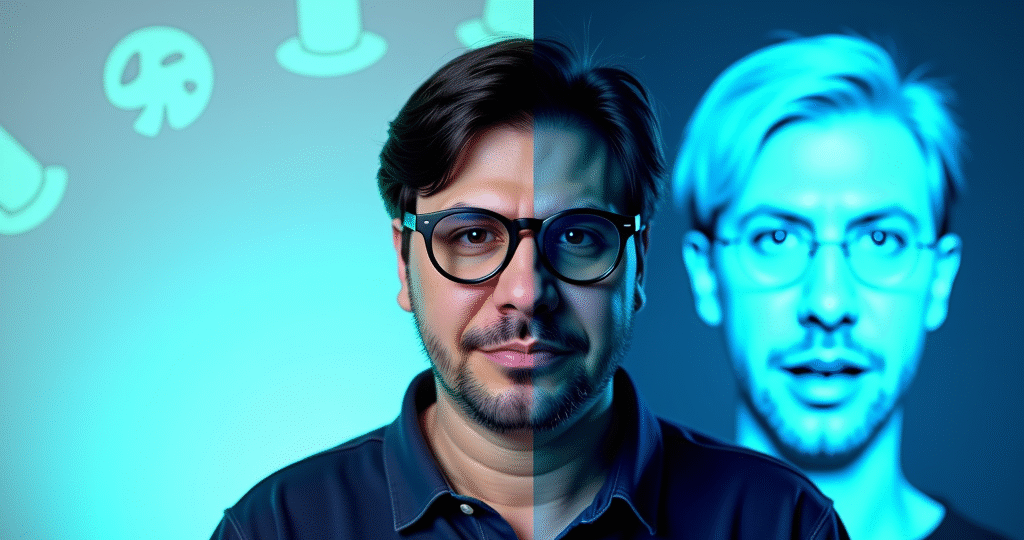
This week has been a real laboratory for the extremes of artificial intelligence. While OpenAI democratized video creation with Sora 2, and turning anyone into a “mobile movie studio” on the other end, Trump used AI to create offensive content against protesters. This duality is no coincidence - it is the clearest reflection of where we are in the evolution of artificial intelligence.
The Transformative Potential: Sora 2 and Creative Democratization
Let's start on the bright side. O Sora 2 represents exactly what I've always advocated: technology that empowers, not replaces. With improvements in physical realism, audio synchronization and the “Cameo” feature - which allows safe use of your own image and voice - we're seeing AI do what it does best: amplify human creativity.
But here's the crucial point: even though access is officially restricted to the USA and Canada, the tool is already being accessed via VPN by Brazilian creators. This shows something I always observe in my work with companies: innovation doesn't wait for perfect regulation, it finds a way.
Join my WhatsApp groups! Daily updates with the most relevant news in the AI world and a vibrant community!
- AI for Business: focused on business and strategy.
- AI Builders: with a more technical and hands-on approach.
The interesting thing is that, while we discuss the risks of AI, it is already solving real problems. The R$ 18 million invested in sustainability projects with AI - including forecasting forest fires in the Amazon and monitoring the Pantaял - prove that technology can be a powerful ally in solving socio-environmental challenges.
The Dark Side: When AI Becomes a Political Weapon
But then we reach the other extreme. Trump's publication shows how the same technology that democratizes creation can be used for disinformation and polarization. It's not about technology being good or bad - it's about how we use it.
This episode raises fundamental questions that I often discuss with business leaders: how to ensure the ethical use of AI? How do we create guardrails without stifling innovation? The answer lies not in the technology itself, but in the governance we build around it.
The Experts' Warning: The US$ 1 Trillion Bubble
And speaking of governance, we can't ignore the warning about the AI bubble which could be “the biggest and most dangerous in history”. Julien Garran, of the MacroStrategy Partnership, points out that unprofitable AI startups have accumulated around US$ 1 trillion in market value - a bubble 17 times larger than that of the .com companies of the 1990s.
This is where my experience with more than 10,000 startups comes in: hype doesn't sustain business in the long term, real value does. AI needs to solve real problems and generate measurable results. This is what separates genuine innovation from financial speculation.
Brazil at the Crossroads: Opportunities and Challenges
And where is Brazil in this story? A MP Luísa Canziani's criticism of the government's “lack of synergy” in the regulation of AI reveals a problem I see all the time: we have talent, we have use cases, but we lack strategic coordination.
About that, executives wonder how to bring AI into the real world and leverage business. The answer lies in “physical AI” - embedding intelligence in everyday systems, from smart sensors in manufacturing to healthcare systems that speed up diagnoses.
Education: The Most Fertile and Most Dangerous Ground
One of the most interesting debates this week came from a teacher's reflection on AI in the classroom. As someone who has always defended education as the key to transformation, I see AI's greatest potential and greatest risk here.
The potential: personalizing learning, accelerating research, democratizing knowledge. The risk: outsourcing critical thinking, creating technological dependency, widening inequalities.
The solution? It's not about resisting AI in education, it's about teaching it responsibly. It's about training thinkers who use AI as a tool, not as a crutch.
The Browser War 2.0
And to conclude this panorama, we have the return of the browser war, now driven by AI. Just as in the 1990s, when we fought for speed and compatibility, today we fight for virtual assistants, intelligent automations and personalization.
This reminds me that innovation is cyclical, but always evolving. The companies that win will not be those with the best technology, but those that create the most robust and reliable ecosystems.
What This Week Teaches Us
This AI week has shown us three fundamental lessons:
- Technology is neutral - can create amazing videos or dangerous disinformation
- The value is in the application - sustainability projects prove real impact beyond the hype
- Governance is urgent - we need regulatory frameworks that protect without hindering innovation
We live in a unique moment: AI is mature enough to generate real value, but young enough that we are still defining how we want to use it. It is our responsibility - as leaders, entrepreneurs and citizens - to ensure that we choose the right side of history.
In my mentoring with executives and companies, I always emphasize: it's not about being in AI or not, it's about being in it in the right way. With a clear strategy, defined use cases and, above all, solid values to guide every technological decision.
After all, as this week proved, the difference between using AI to create an inspiring video about sustainability or to attack protesters isn't in the technology - it's in us.
✨Did you like it? You can sign up to receive 10K Digital's newsletters in your email, curated by me, with the best content about AI and business.
➡️ Join the 10K Community here
RELATED POSTS
View all



 PT_BR
PT_BR EN
EN ES
ES AR
AR