


WhatsApp Chooses Brazil for AI While SERPRO Develops National Model - Why This Moment Defines Our Digital Maturity
October 15, 2025 | by Matos AI
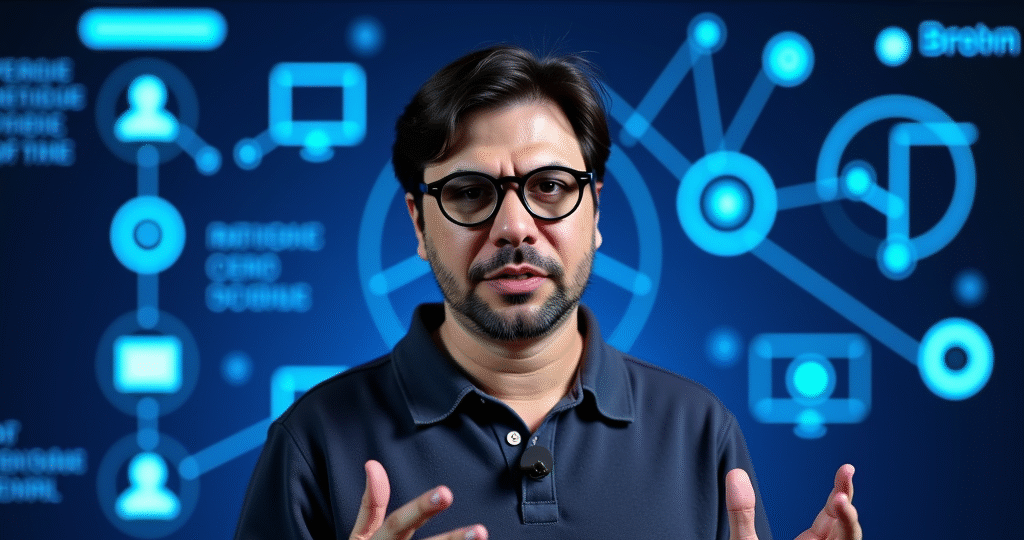
When WhatsApp chooses Brazil as the first country to test its new tool for summarizing messages with artificial intelligence, it's no coincidence. When SERPRO announces the development of a national AI model with 10 billion parameters, it's no coincidence either. And when Brazilian companies begin to suffer from the phenomenon of “workslop” - useless work generated by poorly implemented AI - we are facing a scenario that reveals our growing digital maturity.
The last 24 hours have brought news that, taken together, paint a fascinating picture: Brazil is positioning itself as a global AI laboratory while facing the same maturity challenges as developed markets.
Brazil as a Global Laboratory: The WhatsApp Case
Meta's choice of Brazil to debut WhatsApp's message summaries feature isn't just about our user base - we're the platform's second largest market in the world. It's about our ability to absorb and validate emerging technologies responsibly.
Join my WhatsApp groups! Daily updates with the most relevant news in the AI world and a vibrant community!
- AI for Business: focused on business and strategy.
- AI Builders: with a more technical and hands-on approach.
Second the Folha de S.Paulo, The implementation uses “private processing technology” which maintains end-to-end encryption. No messages are stored, and only those who request the summary can view it. This is exactly the kind of responsible innovation we need.
But why Brazil first? Over the years working with companies and startups, I've noticed that our market has a unique characteristic: we are critical early adopters. We test, but we also question. We adopt, but we demand transparency. This maturity makes us ideal partners for global validation of sensitive technologies.
Digital Sovereignty in Action: SERPRO's National Model
While we test global solutions, we also build our own. SERPRO's announcement of the development of a national AI model represents a strategic milestone that goes far beyond technology - it's about digital sovereignty.
As reported by Tele.Síntese, The Brazilian model will have a minimum of 10 billion parameters, multimodal support and will be trained with national data. Most importantly, it will operate entirely on national infrastructure, without transferring data abroad.
This initiative echoes something I've been advocating for years: the importance of building our own technological capacity. It's not about digital isolationism, but about strategic autonomy. In a world where data is the new oil, controlling our refinery makes all the difference.
The Dark Side of Maturity: The “Workslop” Phenomenon”
Our growing sophistication in AI also exposes us to the problems of mature markets. The concept of “workslop” - a term that combines “work” and “slop” - describes a phenomenon that we have already observed in Brazilian companies.
As he explains TechTudo, workslop produces deliveries that seem useful but are superficial, generating rework and demotivation. A survey indicates that 40% of American workers have received tasks of this type in the last month, with losses of up to US$ 9 million annually in companies with 10,000 employees.
In my consultancies, I see this pattern repeated: executives excited about AI implement tools without proper governance, creating a false sense of productivity. The result? More work, not less.
How to Avoid Workslop
The solution is not less AI, but better implemented AI. Some practical guidelines:
- Define clear value metrics before implementing any AI tool
- Train AI “pilots who understand how to use technology to free up creative time
- Establish active governance with regular reviews of outputs
- Prioritize tasks that genuinely benefit you intelligent automation
Sector Transformation: From the Senate to Accounting
Brazil's digital maturity is also reflected in institutional debates. The public hearing in the Senate, as reported by Senate News, In his talk, he discussed the impact of AI on the workplace with a sophistication that would have been unthinkable just a few years ago.
Senator Paulo Paim, as rapporteur for updating the Labor Statute, demonstrates that our institutions are proactively adapting to technological changes. We're not just reacting; we're anticipating.
At the same time, traditional sectors such as accountancy are already experiencing a “silent revolution”. According to Accounting Portal, accountants already use AI for bank reconciliations, expense classification and predictive analysis, redefining their role as strategic advisors.
The Global Scenario: Between Collaboration and Competition
While we build our national capacity, the global scenario offers us important lessons. The “godfather of AI's” warning about the US losing leadership to China due to cuts in universities, reported by State, highlights something fundamental: investment in education is investment in future competitiveness.
Brazil has a unique opportunity to learn from global successes and mistakes. Companies like Salesforce are betting on “autonomous agents” that collaborate with humans, while experts like Sol Rashidi advocate integrating AI and human intelligence, not replacing them.
This is the approach I see working in the companies I work with: AI as an amplifier of human capabilities, not as a substitute.
Oracle and the Future of Intelligent Infrastructure
The upgrade of the Oracle database to AI Database 26ai, according to reported by InfoMoney, illustrates a crucial trend: AI is becoming an infrastructure, not a feature.
When tech giants incorporate AI natively into their base platforms, it signals that we have reached a turning point. AI is no longer “the next big thing”; it's the new normal.
Three Lessons for Brazilian Leaders
Analyzing these movements over the last 24 hours, I can draw three strategic insights:
1 Balancing Adoption and Sovereignty
We can be global early adopters while developing national capacity. WhatsApp in Brazil and the SERPRO model are not contradictory - they are complementary.
2. Governance Before Implementation
Workslop is avoidable with proper planning. Companies that invest in AI governance from the outset avoid the million-dollar losses of poorly planned implementations.
3. Humanizing Transformation
The debates in the Senate and the transformation of accounting show that well-managed technological change elevates professions, not eliminates them. Accountants become strategic consultants; workers become “AI pilots”.
Brazil's AI Moment
We are living through a unique moment in Brazilian digital history. We are both a laboratory for global innovation and developers of national solutions. We face the challenges of mature markets while building our own intelligent infrastructure.
This duality isn't a problem - it's a competitive advantage. Countries that manage to navigate this complexity position themselves as regional leaders in AI.
In my mentoring and consulting projects, I have helped executives and companies to seize exactly this moment: when being a responsible pioneer generates sustainable advantage. The window is open, but it won't stay that way forever.
The Brazil of AI is no longer a future promise. It is a present reality, with all its opportunities and responsibilities. How we take advantage of it depends on the choices we make today.
✨Did you like it? You can sign up to receive 10K Digital's newsletters in your email, curated by me, with the best content about AI and business.
➡️ Join the 10K Community here
RELATED POSTS
View all

The Advancement of AI in Brazil: From Violence Prevention to the Business of the Future
December 21, 2024 | by Matos AI
The Future Has Arrived: The Last 24 Hours That Changed the AI Scenario in Brazil and the World
December 7, 2024 | by Matos AI
 PT_BR
PT_BR EN
EN ES
ES AR
AR